Reachability analysis
Reachability analysis identifies modules in the call chain between an upper boundary taxonomy and a lower boundary taxonomy. It is useful when you want to discover all modules involved between a known entry point and a known downstream boundary. Use this feature to generate taxonomies from actual call-chain structure instead of manual grouping alone.
For example, consider the module relation diagram below.
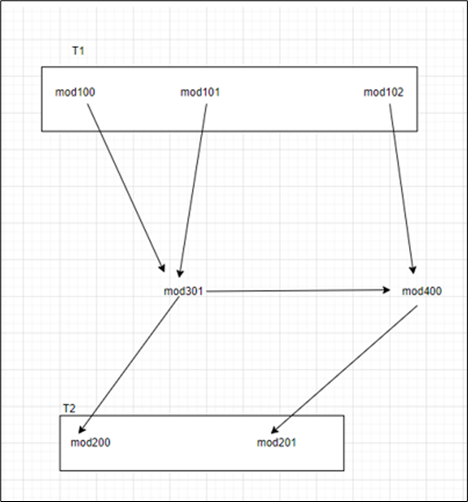
T1 is the upper boundary, and T2 is the lower boundary.
There are three paths from T2 to T1: through mod100, mod101, and mod102.
Reachability analysis creates taxonomies for all modules in the call chain that access these three paths. Additionally, it finds all other modules by walking the call chain downward from the entry points (top-down).
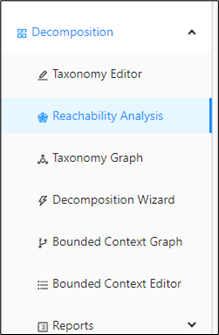
In the left navigation panel, navigate to Decomposition > Reachability Analysis.
Clear the option shown in the page before you select the upper and lower boundaries.
Select T1 as the upper boundary and T2 as the lower boundary.
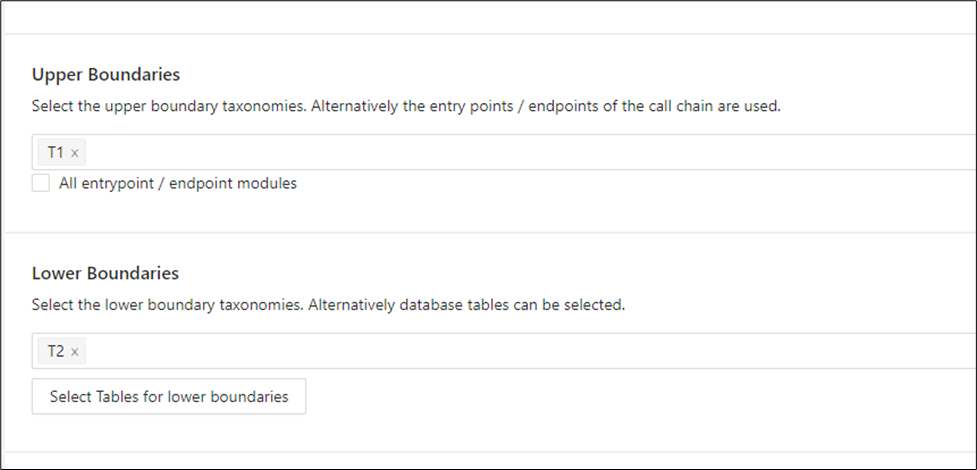
Then click Start Reachability Analysis.
The analysis starts and displays the output after a few seconds.
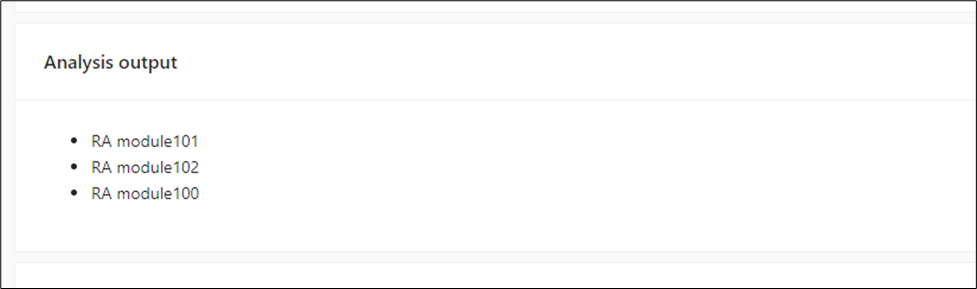
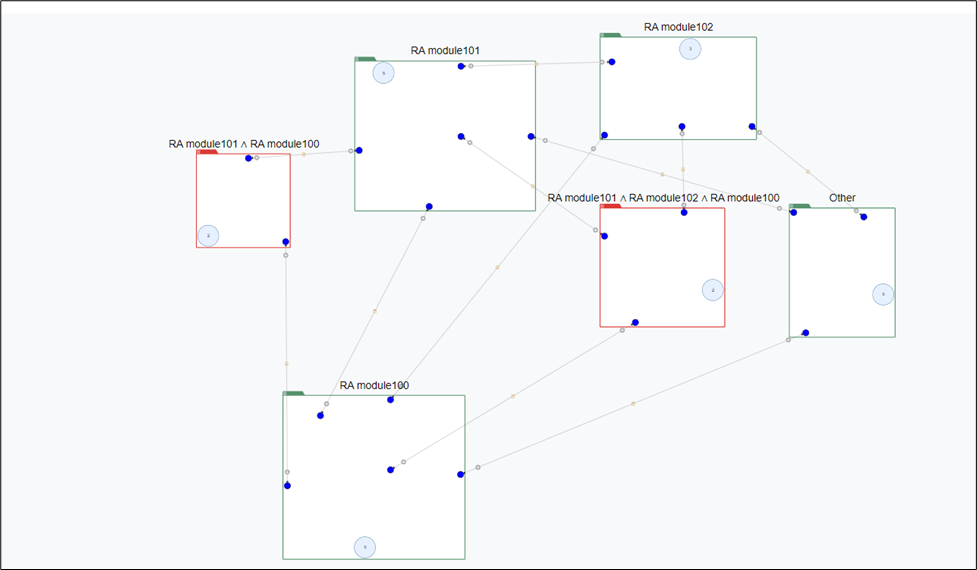
The output creates the taxonomies shown above, containing modules in the call chain.
You can also view the same result visually in Taxonomy Graph by clicking Show in Taxonomy Graph.